9 Proven Strategies to Build a Conversational AI Chatbot That Actually Converts
Learn 9 actionable strategies to build a conversational AI chatbot that drives real conversions — from intent design to seamless handoffs, with practical examples for SaaS and e-commerce.
Most AI chatbots fail. Not because the technology is broken — but because they're designed to answer questions instead of drive outcomes. The gap between a chatbot that talks and one that converts is enormous, and it comes down to strategy, not sophistication.
In this guide, we'll walk through 9 proven strategies to build a conversational AI chatbot that actually moves visitors toward action — whether that's signing up, booking a demo, or making a purchase.
The Architecture Behind Great Chatbots
Before diving into strategy, it helps to understand the architecture that makes modern conversational AI work. Here's a typical system design:
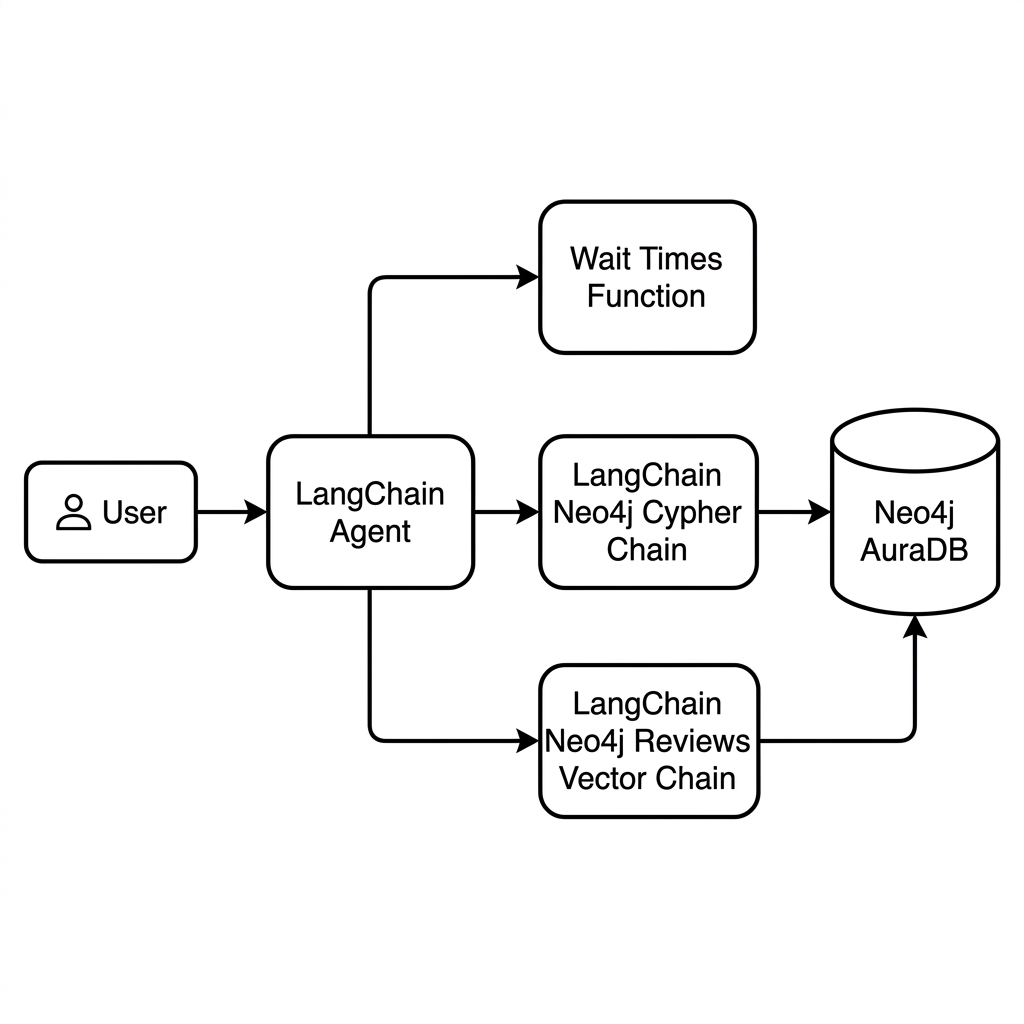
This architecture shows how a LangChain agent orchestrates multiple data sources — a vector database for semantic search, a graph database for structured queries, and custom functions for real-time data — to deliver intelligent, context-aware responses.
The key insight: a great chatbot isn't a single model. It's a system that routes user intent to the right data source.
1. Design for Intent, Not Just Answers
Most chatbot builders start by uploading their FAQ docs and calling it done. That gives you a glorified search bar.
Instead, map out the user intents you actually want to serve:
- Informational: "What does your product do?"
- Navigational: "Where can I see pricing?"
- Transactional: "I want to start a free trial."
- Support: "My integration isn't working."
Each intent type needs a different response strategy. Informational queries need concise answers. Transactional queries need a clear CTA. Support queries need empathy and escalation paths.
Pro tip: Start with 5-10 high-value intents. You can always expand later. Trying to handle everything on day one is the fastest way to build a bot that handles nothing well.
2. Use Retrieval-Augmented Generation (RAG) — Properly
RAG is the technique of grounding your LLM's responses in real data from your knowledge base. It's table stakes for any serious chatbot in 2026.
But most RAG implementations are naive — they just dump the top 3 vector search results into the prompt and hope for the best.
What actually works:
- Chunk your content intelligently. Don't split docs at arbitrary character limits. Split by semantic sections — headings, paragraphs, logical units.
- Use metadata filters. Tag your chunks with category, product, date, etc. Filter before searching, not after.
- Re-rank results. Vector similarity is a rough approximation. Use a cross-encoder or re-ranking model to surface the most relevant chunks.
- Cache embeddings. Store embeddings in your database before sending to the vector store. This prevents duplicate processing and reduces costs.
3. Craft a Personality That Matches Your Brand
Your chatbot's tone is a brand touchpoint. A developer tool company shouldn't sound like a luxury fashion brand, and vice versa.
Define these upfront:
| Attribute | Example |
|---|---|
| Tone | Professional but approachable |
| Formality | Semi-formal, avoids slang |
| Emoji usage | Minimal, only for emphasis |
| Response length | Concise — 2-3 sentences preferred |
| Error handling | Honest, suggests alternatives |
Encode this into your system prompt and test it against edge cases. A chatbot that switches personality mid-conversation destroys trust instantly.
4. Implement Smart Routing and Escalation
Not every conversation should stay with the bot. The best chatbots know when to hand off.
Build a confidence-based routing system:
- High confidence (>0.85): Respond directly.
- Medium confidence (0.5–0.85): Respond but offer "Was this helpful?" with escalation option.
- Low confidence (<0.5): Route to human agent immediately with full conversation context.
The critical detail most teams miss: pass the entire conversation transcript to the human agent. Nothing frustrates a customer more than repeating themselves.
5. Optimize the First Message
Your chatbot's first message is the most important message it will ever send. It sets expectations, establishes capability, and determines whether the user engages or bounces.
Bad first messages:
- "Hi! How can I help you?" (generic, doesn't show capability)
- "Welcome to our website! I can help with sales, support, billing, partnerships, and more!" (overwhelming)
Good first messages:
- "Hey! I can help you get set up with bot4U or answer questions about our plans. What are you looking at?"
- "Welcome back! I noticed you were looking at our Pro plan. Want me to walk you through the features?"
The best first messages are contextual — they reference the page the user is on, their account status, or their previous interactions.
6. Build Conversion Micro-Funnels Into Conversations
A chatbot that only answers questions is leaving money on the table. Design conversational funnels that guide users toward conversion.
Here's a simple framework:
User: "What's the difference between Free and Pro?"

Bot: "Great question! The main differences are:
• Free: 1 chatbot, 100 messages/month
• Pro: Unlimited chatbots, 10K messages/month, custom branding

Most teams starting out go with Pro — it's $29/month and
you can cancel anytime. Want me to set up a free trial?"
Notice the pattern: Answer → Context → Soft CTA. The bot answers the question, adds helpful context, and ends with a natural call-to-action. No hard sell. No popup. Just a logical next step in the conversation.
7. Instrument Everything
You can't optimize what you don't measure. Track these metrics from day one:
- Engagement rate: % of visitors who interact with the chatbot
- Resolution rate: % of conversations resolved without human intervention
- Conversion rate: % of chatbot conversations that lead to a desired action
- CSAT score: Post-conversation satisfaction rating
- Fallback rate: % of messages where the bot couldn't provide an answer
- Average conversation length: Indicates complexity and engagement
Set up a conversation_logs table that captures every exchange. Log the user query, bot response, confidence score, and whether escalation occurred.
interface ConversationLog {
  id: string;
  sessionId: string;
  userMessage: string;
  botResponse: string;
  confidenceScore: number;
  intent: string;
  escalated: boolean;
  convertedAction?: string;
  timestamp: Date;
}
This data is gold for improving your bot over time.
8. Handle Edge Cases Gracefully
The difference between a demo bot and a production bot is edge case handling. Plan for:
- Off-topic questions: "What's the weather?" → Gently redirect.
- Adversarial inputs: Prompt injection attempts → Hard guard.
- Multi-language queries: Detect language, respond accordingly or redirect.
- Empty or gibberish input: Don't crash. Acknowledge and ask for clarification.
- Repeated questions: Recognize loops and offer escalation.
A simple but effective pattern:
if (isOffTopic(query)) {
  return "I'm best at helping with [your product]. For other questions, you might try [alternative]. Can I help with anything about [product]?";
}
The tone matters as much as the logic. Never make the user feel stupid for asking the wrong question.
9. Iterate Based on Real Conversations
Launch with a v1 that handles your top 10 intents well. Then watch the conversation logs.
Weekly review process:
- Read the 20 worst-rated conversations.
- Identify the root cause for each failure (bad retrieval? wrong intent? missing content?).
- Fix the top 3 issues.
- Monitor the next week for improvements.
This simple loop — observe, diagnose, fix, verify — is more valuable than any amount of pre-launch optimization. Real user conversations will surprise you in ways you never anticipated.
Putting It All Together
Building a conversational AI chatbot that converts isn't about having the fanciest model or the most features. It's about:
- Understanding what your users actually need (intent design)
- Grounding responses in real data (RAG done right)
- Matching your brand voice (personality)
- Knowing when to step back (smart escalation)
- Making the first impression count (first message optimization)
- Guiding toward action (conversion micro-funnels)
- Measuring everything (instrumentation)
- Handling the unexpected (edge cases)
- Continuously improving (iteration loops)
If you're building a chatbot for your product or website, bot4U makes it easy to get started — ingest your docs, customize the personality, embed on your site, and start converting visitors into customers. No code required.
Have questions about building your own AI chatbot? Drop us a message — we'd love to help.